Made to Order
On-Demand Printing
All products are produced on-demand, in accordance with stringent production protocols designed to ensure consistent and superior quality.

We see a teenage girl, dressed in peasant robes, sitting on a
rumpled bed in a room with a bumpy, cobblestone floor. She seems afraid and awed. Who could she be? What is happening? What is that bright column of light on the left? This painting is an unusual version of one of the oldest themes in European art, the Annunciation (which means announcement). In this New Testament Bible story, the angel Gabriel tells Mary that she will become the mother of Jesus. Traditional paintings of the Annunciation show Mary wearing fancy blue robes and seated in a European palace or cathedral, as she listens calmly to an angel with glorious wings and a halo.
Tanner made his painting so different from other artists’ paintings of the same subject because he wanted the scene to be realistic.
He painted The Annunciation in 1898, just after returning from his
first trip to the Holy Land—Egypt and Palestine (now Israel). Sketching ordinary Jewish people in the settings where Jesus lived moved Tanner deeply, and he tried to make his painting as authentic as possible.
Tanner’s academic training is evident in his skillful depiction of
Mary’s tense face and body and in his use of thin, transparent glazes to create the dark shadows and the soft, luminous effect. He also included several religious symbols in some of the details. The three pottery vessels in the corners may represent Mary since she will soon be the vessel of Jesus. The shelf high up on the wall in the upper left corner intersects the column of light to form the shape of a cross, the symbol of Christianity.
For Tanner, just as for African American artists who made pottery and quilts, and for preachers and congregations who sang spirituals, certain Bible stories became metaphors for freedom from slavery
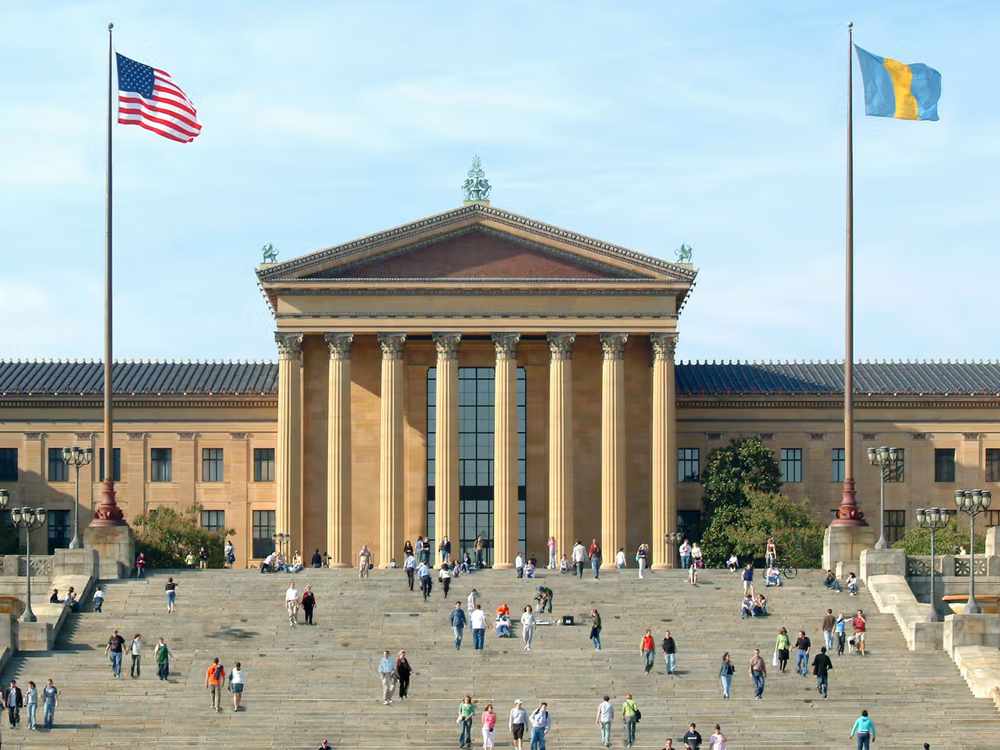
and discrimination. When The Annunciation was first shown in America, it was hailed as a “brilliant masterpiece.” In 1899 the painting was purchased for the city of Philadelphia and exhibited at the Pennsylvania Museum and School of Art (now the Philadelphia Museum of Art). It was the first work by Tanner to find a permanent home at a museum in the United States.
Raised in Philadelphia, Henry Ossawa Tanner (American [active France], 1859–1937) was inspired to become a painter at the age of thirteen, when he observed an artist at work in Fairmount Park. As a young man, he studied painting at the Pennsylvania Academy of the Fine Arts. In the early 1890s, he moved to Paris, France, to pursue his artistic career because he found it impossible to “fight prejudice and paint at the same time” in the United States. In Paris, he painted landscapes, stories from the Bible, and scenes from everyday life, and his work received international acclaim. Tanner’s long and successful career secured his position as a leading artist of his day and inspired others to follow in his footsteps.
Source: Philadelphia Museum of Art