Made to Order
On-Demand Printing
All products are produced on-demand, in accordance with stringent production protocols designed to ensure consistent and superior quality.

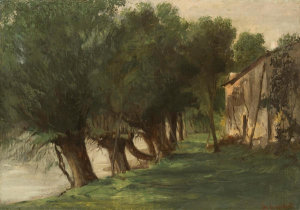
Constable’s oil sketches can be divided into two groups: small-scale notations, or studies, painted outdoors on modest pieces of paper or canvas; and large studio sketches noted for their rough handling and loose brushwork. This study was executed quickly and sought to capture elements of the weather, landscape, and sky.
“Painting,” wrote John Constable (English, 1776–1837), “is but another word for feeling.” These words immediately call to mind his paintings of the English countryside, which unite close observation with expressive, painterly brushwork. Particularly significant among his works are his oil sketches, which he typically painted outdoors, working quickly to document subtle meteorological shifts. Capturing unique moments in time, these works are remarkable for their immediacy and freshness, and were admired by younger painters such as Theodore Géricault (1791–1824) and Eugène Delacroix (1798–1863).
Source: Philadelphia Museum of Art